The True Cost of Paradise: Why California’s Elite Are Trading the Coast for the Sierras

The True Cost of Paradise: Why California’s Elite Are Trading the Coast for the Sierras

For decades, the California dream was the ultimate benchmark of success. A home in the Bay Area or a coastal estate in Southern California signaled that you had arrived. But over the last few years, a quiet yet profound shift has occurred among high-net-worth individuals. The dream hasn’t disappeared; it has simply relocated.

Today, the most discerning buyers are looking east, trading the congestion and high costs of the Golden State for the expansive, tax-free luxury of Northern Nevada. At The David Morris Group, we are seeing a record number of tech executives, entrepreneurs, and affluent families making the move to Reno, Sparks, and Lake Tahoe.

But this migration is about much more than just saving money. It is about reclaiming time, space, and peace of mind. It is about elevating your standard of living. Here is why California’s elite are deciding that the true cost of coastal paradise is simply too high—and why the Sierras offer a superior alternative.

The Financial Reality: Keeping What You Earn

It is impossible to discuss the California-to-Nevada migration without addressing the financial elephant in the room: taxes.

California currently levies the highest top marginal state income tax rate in the nation at 13.3 percent for high earners. Furthermore, recent legislative proposals targeting the ultra-wealthy—including discussions of a wealth tax—have created an environment of financial uncertainty for those who have spent their lives building successful businesses and portfolios.

Just across the border, Nevada offers a stark contrast. The Silver State has zero state income tax, zero corporate income tax, and no estate or inheritance tax. For a high-net-worth individual or a successful entrepreneur, establishing residency in Nevada can result in hundreds of thousands—if not millions—of dollars in annual savings.

However, our clients quickly discover that the tax benefits are merely the catalyst for the move. The real reward is the lifestyle upgrade that follows.

Reclaiming Your Time: The End of the Commute

Time is the ultimate luxury, and in California’s major metros, it is being squandered on the freeway. According to recent traffic scorecards, San Francisco commuters lost an average of 112 hours to traffic congestion in 2025 alone. That is nearly two full weeks of life spent staring at taillights.

In Northern Nevada, the concept of a “grueling commute” simply does not exist. Whether you are driving from a custom estate in ArrowCreek to a meeting in downtown Reno, or heading from Incline Village to the Reno-Tahoe International Airport, the drive is measured in minutes, not hours.

This reclaimed time fundamentally changes how our clients live. Instead of spending two hours in gridlock, they are spending that time having breakfast with their families, hitting the gym, or taking a morning hike in the Sierra foothills.

The Four-Season Lifestyle: Ski in the Morning, Golf in the Afternoon

When you move to the Reno-Tahoe area, you aren’t just buying a home; you are buying access to a world-class, four-season playground.

The region offers a unique geographical advantage that few places on earth can match. In the spring, it is entirely possible to ski the pristine powder of Mt. Rose or Palisades Tahoe in the morning, and tee off at a championship golf course in the valley by the afternoon.

For those who value outdoor recreation, the lifestyle here is unparalleled. Lake Tahoe provides world-class boating, paddleboarding, and private beach access during the summer months. The surrounding mountains offer hundreds of miles of hiking and mountain biking trails. This is a place where wellness and adventure are built into the fabric of everyday life, right outside your front door.

Uncompromising Luxury: Space to Breathe

In the Bay Area, a budget of $3 million to $5 million might secure a nicely updated, moderately sized home on a small lot with neighbors just feet away. In Northern Nevada, that same investment unlocks a completely different tier of luxury.

Here, buyers are acquiring sprawling, custom-built Mountain-Modern estates in exclusive gated communities like Montrêux, Lahontan, and Gray’s Crossing. These properties offer expansive square footage, multi-car garages for the enthusiast, climate-controlled wine cellars, and resort-style outdoor living spaces with unobstructed views of the Sierra Nevada mountains or the Truckee Meadows.

You are not just buying a house; you are buying privacy, security, and the space to breathe.

A Seamless Transition

Perhaps the most appealing aspect of moving to Northern Nevada is how seamless the transition can be. Reno is located just a short drive or a quick 45-minute flight from the Bay Area. For executives who still need to maintain a presence in Silicon Valley or San Francisco, living in Reno offers the perfect balance: the financial and lifestyle benefits of Nevada, with effortless access to California when duty calls.

At The David Morris Group, we specialize in helping high-net-worth individuals navigate this transition. We understand the nuances of establishing residency, the intricacies of the luxury market, and the specific lifestyle desires of buyers coming from the coast.

If you are ready to stop paying the high cost of coastal living and start experiencing the expansive luxury of the Sierras, we invite you to connect with us.

Contact The David Morris Group Today
📞 (775) 828-3292
✉️ [email protected]
🌐 DavidMorrisGroup.com
Infrastructure Is Reshaping Mobility (and Growth Patterns) in Northern Nevada

Infrastructure Is Reshaping Mobility (and Growth Patterns) in Northern Nevada

In real estate, there are the obvious drivers of value, including location, condition, timing, and then there are the quieter forces working behind the scenes. Infrastructure is one of those forces.

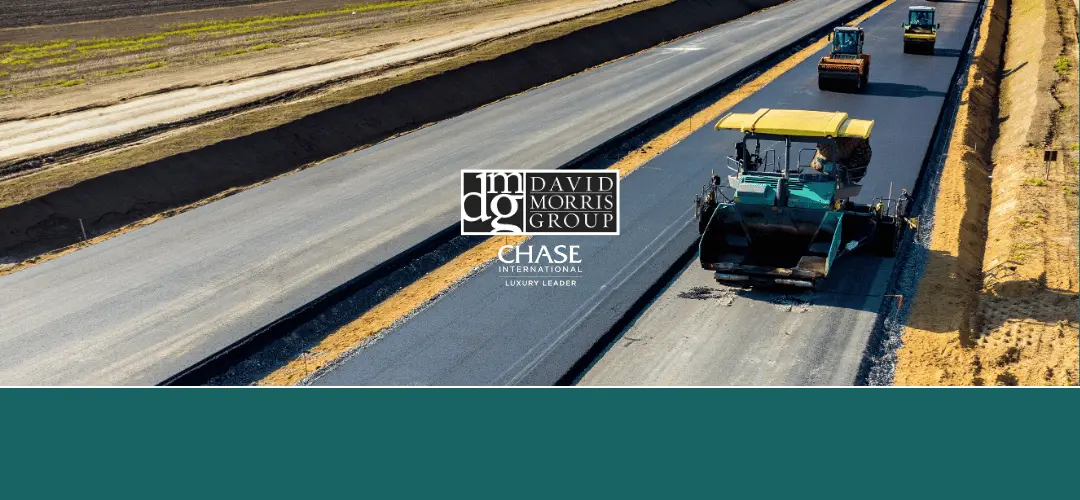
Across Reno, Sparks, and the surrounding Northern Nevada region, significant infrastructure investments are underway. While they may not always grab headlines the way new developments do, these projects are actively reshaping how people move, where growth happens, and ultimately, how property values evolve.

Infrastructure Is Reshaping Mobility (and Growth Patterns) in Northern Nevada

From our perspective at The David Morris Group, this is one of the most important (and often underappreciated) stories unfolding in our market right now.

The Projects Driving Change

Mill Street Capacity and Safety Project (through mid-2026)

Mill Street has long served as a vital east-west connector through Reno, linking residential neighborhoods with employment hubs, industrial areas, and key access points across the city. The current improvements are focused on increasing roadway capacity, enhancing safety features, and improving traffic flow for both commuters and commercial vehicles.

But the real impact goes beyond smoother traffic patterns. When a corridor like Mill Street becomes more efficient and reliable, it often attracts additional business investment, supports logistics and distribution growth, and increases the overall desirability of nearby properties. Over time, these types of upgrades can reposition an entire corridor from “functional” to “strategic.”

Arlington Avenue Bridge Replacements and Park Improvements (Expected Summer 2026)

The Arlington Avenue bridges sit at the heart of one of Reno’s most recognizable and beloved areas: the Truckee River corridor. Their replacement, paired with enhancements to nearby parks and public spaces, represents a meaningful investment in both infrastructure and quality of life.

Projects like this are about more than replacing aging structures. They’re about creating an experience. Improved pedestrian access, enhanced aesthetics, and better integration with surrounding public spaces contribute to a stronger sense of place.

From a real estate perspective, these improvements tend to elevate surrounding neighborhoods. Walkability, access to green space, and proximity to well-designed public areas consistently rank among the top drivers of buyer demand. Over time, this kind of investment can transform already desirable areas into premium locations.

Highway 395 Widening and I-80 Bridge Replacements

At the regional level, some of the most impactful changes are occurring along major transportation corridors such as Highway 395 and Interstate 80.

The widening of Highway 395 and the replacement of multiple I-80 bridges are designed to improve traffic flow, reduce bottlenecks, and better accommodate Northern Nevada’s continued population and job growth. These are not small-scale upgrades…they are foundational improvements that support the long-term functionality of the entire region.

For homeowners and investors, proximity to efficient freeway access is a major consideration. Reduced commute times, improved freight movement, and better regional connectivity all contribute to increased desirability. Areas that benefit from improved access often experience stronger demand, particularly as more people prioritize convenience and flexibility in their daily routines.

Citywide Transportation Upgrades: Virginia Street and BRT Improvements

Virginia Street is often referred to as the backbone of Reno, and for good reason. It connects downtown, midtown, and key commercial and residential areas throughout the city.

Ongoing reconstruction efforts, along with enhancements to the RAPID Bus Rapid Transit (BRT) system, are helping to modernize this corridor. These improvements are designed to support more efficient public transportation, improve pedestrian access, and create a more cohesive urban environment.

Cities across the country have shown that when you invest in transit-oriented infrastructure, you encourage density, support local businesses, and create more vibrant, connected communities. In Reno, these upgrades are laying the groundwork for continued revitalization and long-term urban growth.

Why This Matters for Real Estate

Infrastructure projects like these don’t just improve roads…they shape behavior, influence decision-making, and ultimately drive value.

Here’s how that plays out in real time:

Improved Accessibility = Expanded Buyer Interest

When commute times decrease and access improves, more buyers are willing to consider areas that may have previously felt too far or inconvenient. This expands the buyer pool and can increase competition in those neighborhoods.

New Development Corridors Take Shape

Infrastructure often precedes development. When roads are widened, bridges are replaced, and transit systems are enhanced, it signals that an area is preparing for growth. Developers tend to follow these signals, bringing new residential communities, retail centers, and mixed-use projects with them.

Revitalization Gains Momentum

Projects that incorporate walkability, public spaces, and improved transit access tend to accelerate neighborhood revitalization. As these areas become more desirable, they often attract new businesses, restaurants, and amenities, further increasing their appeal.

Long-Term Appreciation Potential

While construction phases can feel disruptive in the short term, they are often indicators of long-term value creation. Areas that benefit from sustained infrastructure investment typically see stronger appreciation over time compared to those that do not.

The Bigger Picture: Following the Path of Growth

One of the most valuable insights we can offer our clients is this: growth is rarely random.

It tends to follow infrastructure.

When cities and municipalities invest heavily in roads, bridges, and transit systems, it’s usually because they anticipate continued expansion, whether in population, employment, or economic activity. These investments are strategic, and they often point directly to where future demand will be strongest.

For buyers, this can mean identifying opportunities before they become widely recognized.
For sellers, it can mean understanding how upcoming improvements may impact timing and pricing strategy.
For investors, it can mean aligning with long-term growth patterns rather than short-term trends.

Final Thoughts from The David Morris Group

Northern Nevada is in a period of meaningful evolution, and infrastructure is at the center of that transformation.

These projects may not always dominate headlines, but they are quietly shaping how our region functions and how it grows. They influence everything from daily commutes to long-term development patterns, and they play a critical role in determining where value is created over time.

At The David Morris Group, we believe that understanding these underlying drivers is essential to making informed real estate decisions. Whether you’re buying, selling, or investing, knowing where infrastructure is improving (and where it’s headed next) can give you a significant advantage.

If you’d like to talk through how these changes may impact your specific goals, we’re always here to help you navigate what’s next: 775) 828-4292 or [email protected].